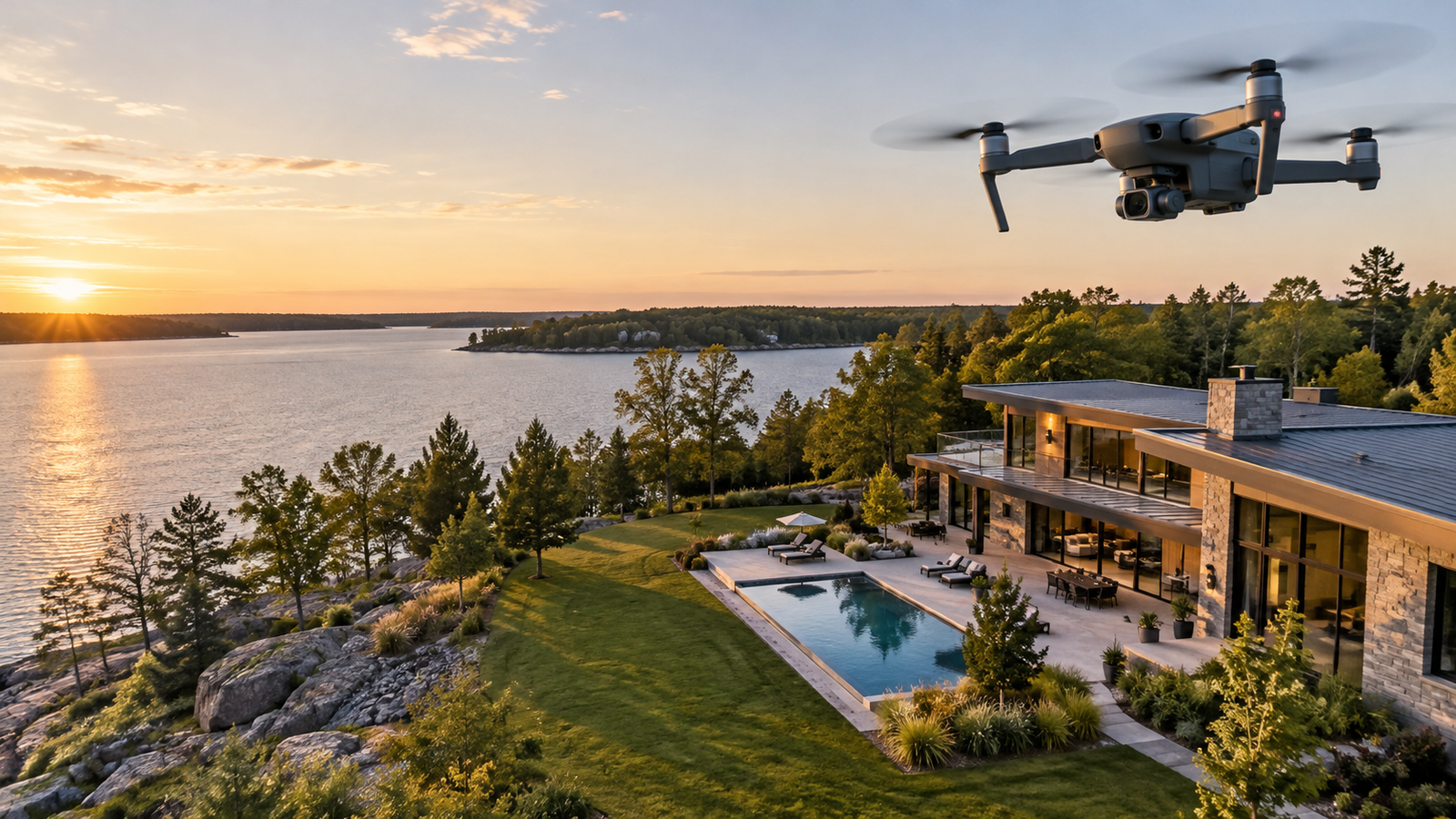
Commercial properties and industrial sites often include roofs, elevations, equipment, and other areas that are difficult to document from the ground. Drone imagery can support a visual review by capturing elevated perspectives and creating a clear record of the conditions visible during a flight.
Good planning matters. A drone inspection is most useful when the scope is specific, the site team is prepared, and the expected documentation is clear from the start.
Define the inspection objective
Start by identifying what needs to be viewed or documented. The objective may be a roof overview, exterior envelope imagery, progress documentation, an elevated visual record of equipment, or a comparison point for future review. Be specific about the areas of concern and the type of images or video that would be most useful.
Provide site and access information
Share the site address, access procedures, parking instructions, safety requirements, and an on-site contact. Include information about active operations, restricted areas, overhead hazards, or times when the site is busiest. These details help the flight team plan the visit and coordinate safely with the people working on site.
Identify priority areas before the visit
A map, marked photo, or simple list can help identify priority elevations, roof sections, equipment, or structures. If there is an existing issue that needs context, explain what is known and where it was observed. The goal is not to diagnose from a distance; it is to focus the visual documentation on the areas that matter to your team.
Understand what the imagery can support
Drone imagery can provide a useful visual record, but it does not replace a formal engineering, roofing, electrical, or safety assessment where one is required. Use the material alongside the appropriate qualified review for the project. Clear expectations keep the deliverable useful and avoid treating images as conclusions they were not intended to provide.
Consider conditions and timing
Lighting, weather, wind, visibility, and activity around the site can influence a flight. Schedule enough flexibility for safe conditions, and flag any deadline or operational constraint in advance. Where an operation requires additional planning or permission, that work should be addressed before the flight.
Decide how the records will be used
Confirm whether you need still images, video, a particular file format, or organized views of specific assets. A defined handoff makes it easier to share the results with facilities, project, or maintenance teams.
For a site-specific discussion, request a quick quote or contact our team with the property location and the areas you want to document.